STATEMENT FROM KNDI C.E.O
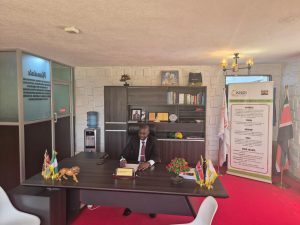
Dr. David Omondi Okeyo, MSc.,PhD, MPH, RPHNS
C.E.O, KNDI
The Kenya Nutritionists & Dieticians Institute (KNDI) was established in Kenya by the Nutritionists and Dieticians Act No. 18 of 2007 (Cap 253B) with the mandate to provide for training, registration and licensing of nutritionists and dieticians; provide for the registration of the standards and practice of the profession; ensure their effective participation in matters relating to nutrition, dietetics and for related purposes. Currently, its functions are aligned to the State Department for Public Health and Professional Standards within the Ministry of Health. In carrying out its mandate, the Institute is governed by its Council to perform its mandate through the following functions: Determine and set a framework for the professional practice of Nutritionists and Dieticians; Set and enforce standards of professional practice for nutrition and dietetics; Enforce a program of quality assurance for the nutrition and dietetics profession; Approve institutions to train persons seeking registration under the Act; Research into and provide public education on nutrition and dietetics; Maintain the competence of members by updating their knowledge through publications and the conduct of continuing professional education; Provide training for nutritionists and dieticians. Design programs and methods for sensitisation on suitable dietary and nutritional habits; and working jointly with other bodies, participate actively in reviews of food, food supplements and fortifiers with nutrient claims. The Nutritionists and Dieticians Act (No. 18) of 2007 spells out the Council’s mandate and functions, and provides for the Council’s committees and their functions. The council, therefore, operationalises the Act through the legal framework and strategic directions as follows. The institute’s vision is “An Innovative Regulatory Institute in the provision of Nutrition and Dietetics services recognised internationally.” With a mission “To provide for regulation in training, licensing, registration, accreditation and other best practices in the field of Nutrition and dietetics in Kenya.”
So far, the Council has been spearheaded by three Chairpersons. The first chairperson was Hon Prof. Julia Ojiambo, who also initiated the Bill that created the institute during her term as a member of parliament. The Second Chairperson was Dr. Evayline M Nkirigacha, Senior Lecturer at Pwani University, Kenya, and the current incoming Chairperson is Prof. Gordon Nguka from Masinde Muliro University. So far, the institute has registered 15 500 professionals in nutrition and dietetics in Kenya, approved 89 training institutions to train professionals, registered internship centers, and approved 10 food products from 4 large food companies as part of consumer quality assurance on matters of nutrition and nutrient claims. The institute has also initiated a mentorship programme through a nationwide student association, the Kenya Nutrition and Dietetics Students Association (KENDSA), which is registered and operates across universities and colleges. The institute has established a strong resource mobilization hub to solicit funding for its functions in addition to professional subscriptions, given its non-exchequer status. It is important to note that Kenya is the only Country in the world with such a legal framework for nutrition and dietetics, which is a great honour for the profession.
Links: www.kndi.institute
SUMMARY OF MAJOR ACHIEVEMENTS (2010-TO DATE)
The Council realizing that its core mandate was to train Professionals in Nutrition and Dietetics, whom Kenya had not seriously embraced in its human resource developments, moved quickly to:
a) Set a Register of all persons trained in Nutrition and or Dietetics.
b) Approved 57 institutions of higher learning offering courses in Nutrition and Dietetics after inspection of their facilities and manpower
c) Developed the minimum core curricula to be used in the training of Nutritionists and Dieticians at Certificate Diploma and Degree levels.
d) Develop a system of indexing of all students enrolled for courses in nutrition and dietetics
e) Prepare guidelines for Internship for newly qualified persons to facilitate their registration in line with Act.
f) Develop a programme for Continuing Professional Development (CPD) to ensure members keep themselves up to date with new developments in the field. Such CPD is tied to renewal of licenses.
g) Develop institutional performance appraisal guidelines.
h) Develop a draft communication Policy document.
i) Develop Resource Mobilization policy.
j) Develop Reserve Fund Policy.
k) Develop Examination Policy.
l) Develop Standard Operating Procedures for Disciplinary actions.
m) Develop FA & HR Committee (Audit) for internal Controls.
n) Consistently hold their statutory meetings on regular basis since the inception of the Institute.